
Somebody told you to go cross-platform to save money , and now you've got a dozen tabs open about Flutter, React Native, and something called Kotlin Multiplatform, with no real idea which one applies to your situation.
Here's the short version. Cross-platform mobile development means writing your app once and shipping it on both iOS and Android, instead of building two separate native apps in two different languages. Alibabaruns parts of its Xianyu app on Flutter. Instagram, Discord, and Shopify's Shop app all run on React Native. And for most businesses, especially startups working with a set budget and a launch date they actually need to hit, this is the faster route to getting something real in front of users.
But faster and cheaper isn't the same as right for you. We've watched clients walk into a call dead set on native, then change their mind the second they see two development quotes sitting next to each other instead of one. We've also watched a few who should have stuck with native, and didn't find that out until performance issues showed up six months after launch.
So before you hire a developer or sign off on a quote, here's what you actually need to know.
What Cross-Platform Mobile Development Actually Means
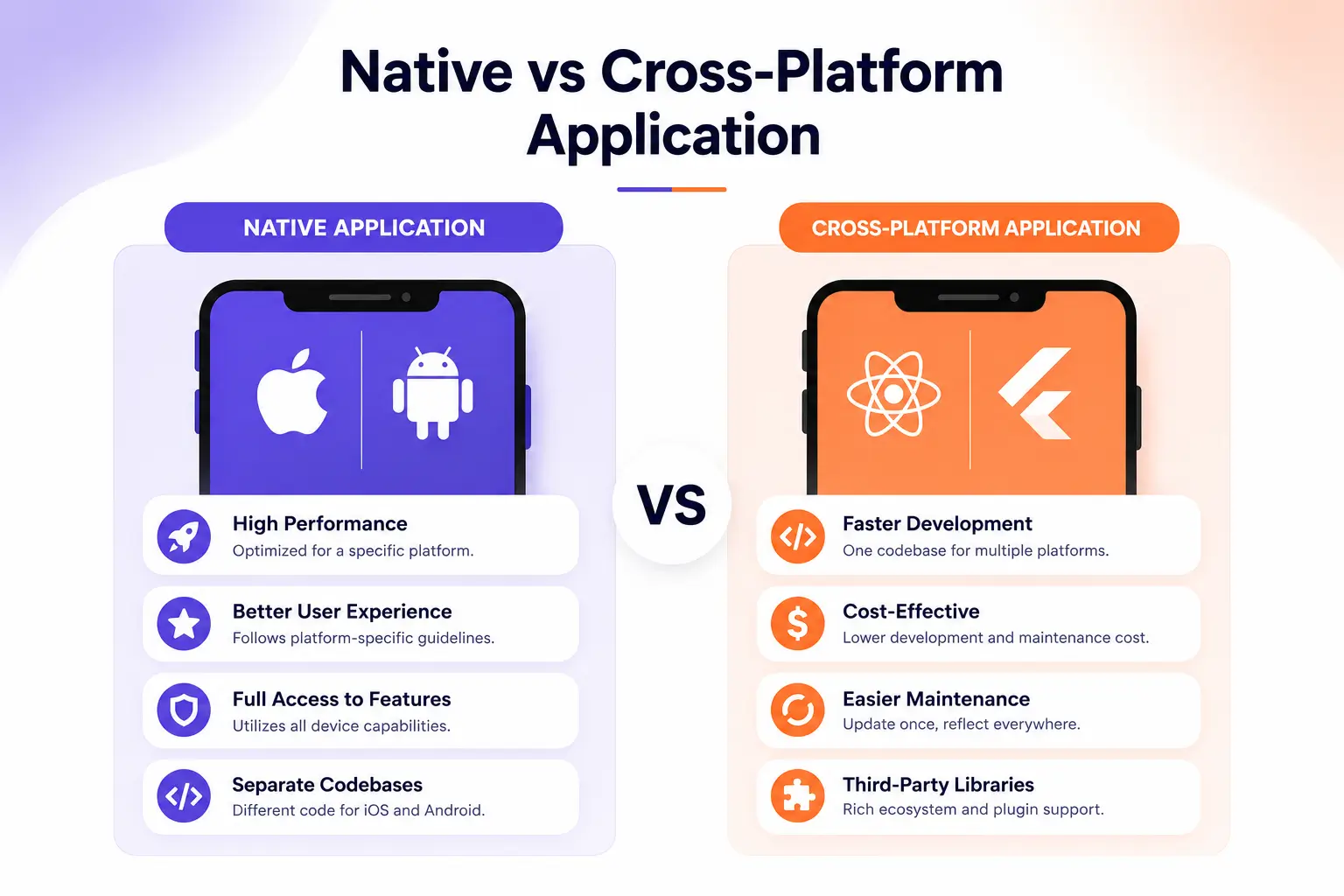
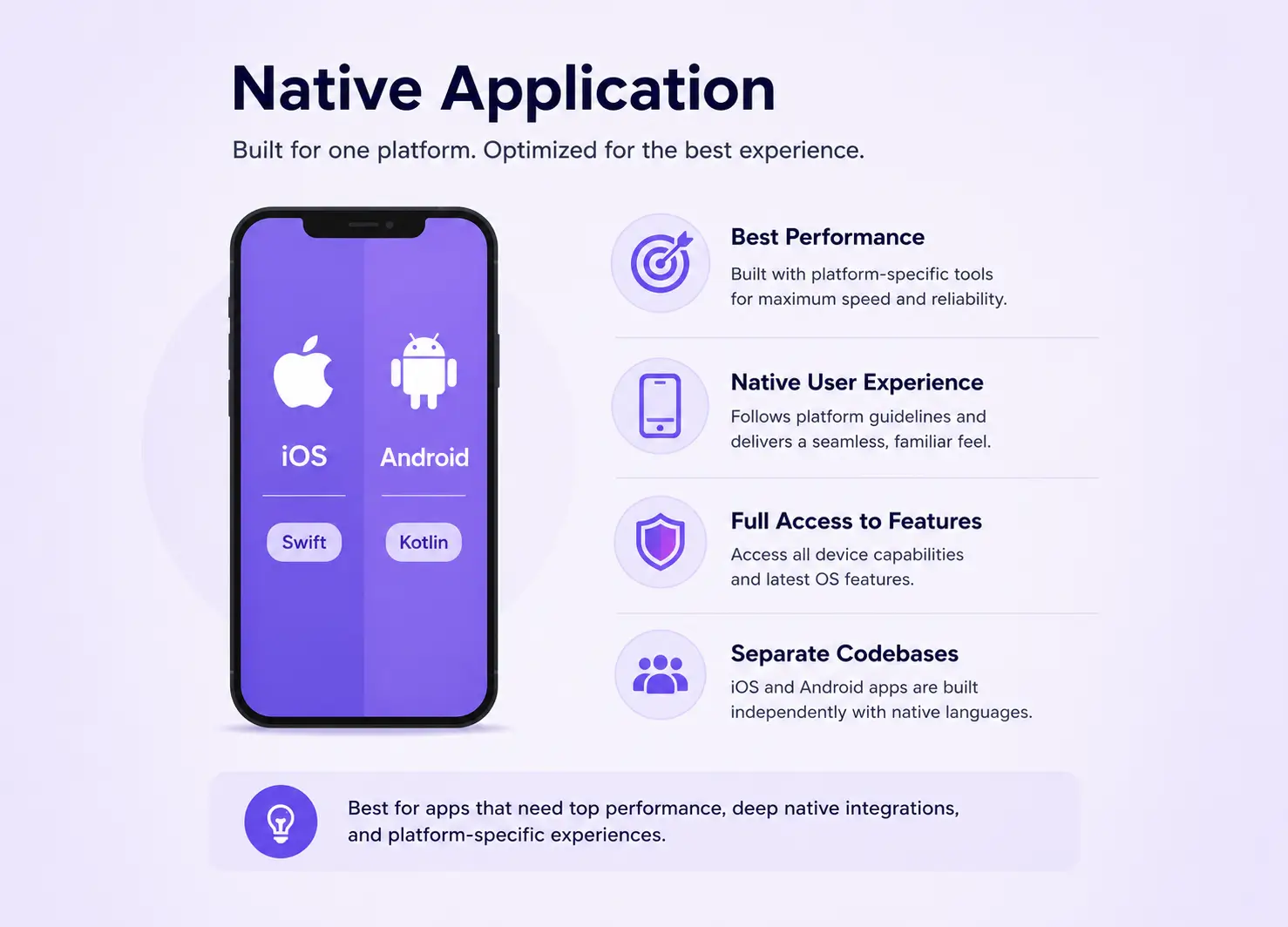
A native app is built specifically for one operating system. iOS apps are usually written in Swift , Android apps in Kotlin. They're two separate codebases, built by, often, two separate teams, tested separately, and updated separately forever.
Cross-platform development flips that. You write the core of your app once, in a single codebase, and a framework translates it into something that runs natively on both iOS and Android. You're not building two products anymore. You're building one and pointing it at two audiences.
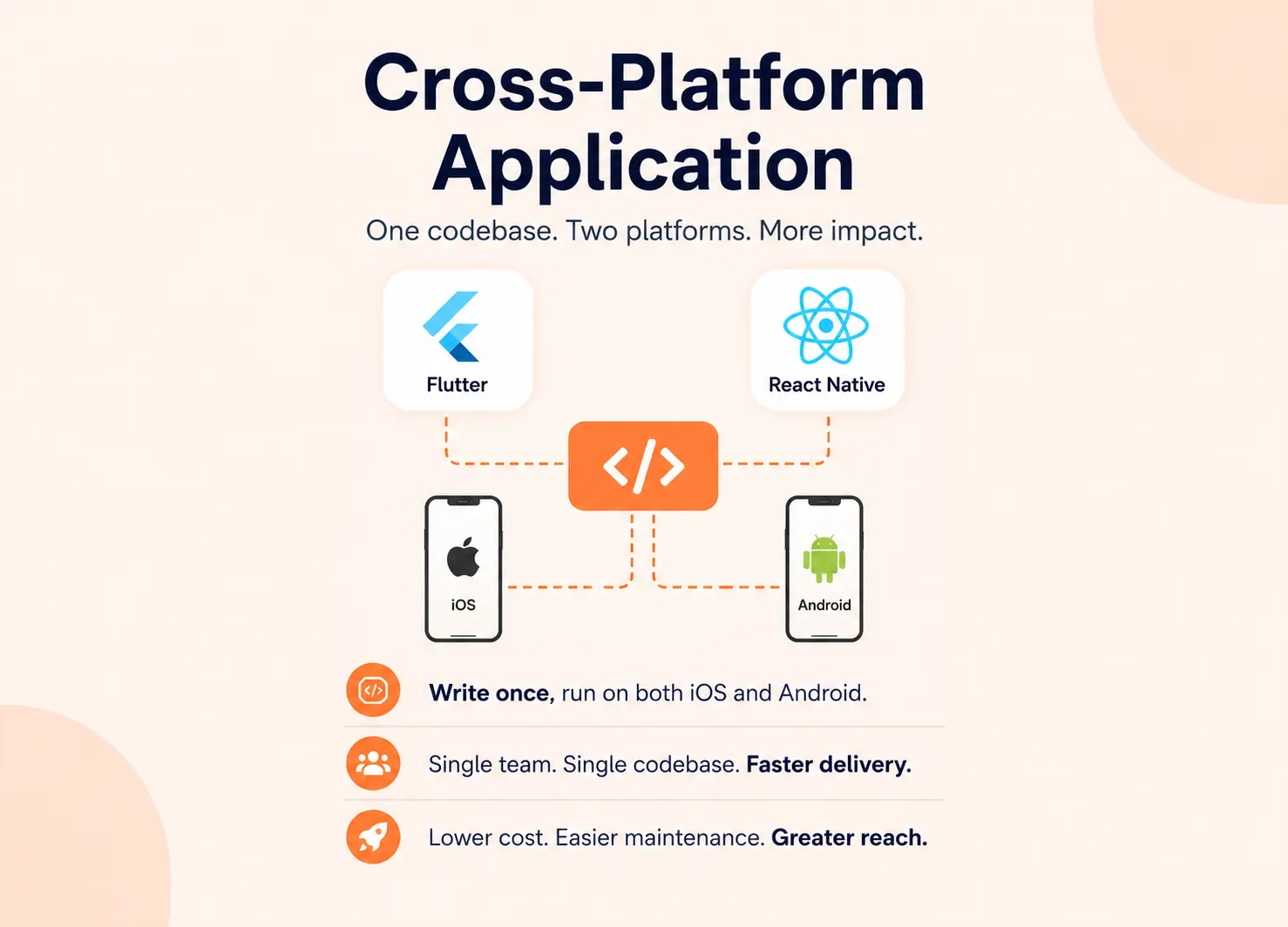
The two frameworks doing most of the heavy lifting right now are Flutter (built by Google, using a language called Dart) and React Native (built by Meta, using JavaScript or TypeScript). Both let a single team ship to both app stores from one codebase, which is the whole reason cross-platform app development keeps showing up in every startup's budget conversation.
Where Native and Cross-Platform Actually Differ
This is where a lot of advice online gets lazy and just says cross-platform is cheaper, native is better . That's not really true anymore, not the way it was five years ago.
Here's where the real gaps show up.
Development time : one team building one codebase almost always finishes faster than two teams building two codebases in parallel. This is the single biggest reason startups lean cross-platform.
Cost : fewer developer hours means a smaller bill. Flutter's own documentation claims up to 90 percent of code can be shared across platforms, and while that number shifts depending on what your app actually does, the direction is right: less duplicated work, less duplicated cost.
Performance : for the vast majority of business apps, booking apps, e-commerce , content, dashboards, cross-platform performance is genuinely hard to tell apart from native. Where it still falls behind is heavy 3D graphics, complex animations, and apps that lean hard on device hardware. Think real-time AR, high-end gaming, or specialized medical devices.
Look and fee l: native apps automatically pick up each platform's own design language. Cross-platform frameworks have gotten very good at mimicking this, but it still takes a developer who knows what they're doing to get an iOS app that feels like iOS and an Android app that feels like Android, instead of one generic app wearing two different icons.
Flutter or React Native, and Does It Even Matter
Honestly, for most projects, the answer matters less than people think.
Flutter tends to win when your app has a lot of custom UI, animation, or a design that needs to look identical on every device. Google uses it for parts of its own Ads and Pay apps.
React Native tends to win when your team already knows JavaScript, or when you want to lean on a huge ecosystem of existing libraries. It's also a natural fit if you're already running a web app in React and want to reuse some of that logic.
There's also Kotlin Multiplatform , which is newer and takes a different approach: share the business logic but keep native UI on each platform. And if you're currently running an older Xamarin app, know that Microsoft ended support for Xamarin. Forms in May 2024. Migrating to .NET MAUI isn't optional anymore; it's just a matter of when.
None of these are wrong choices. The wrong choice is picking one because a blog post told you to, instead of because it fits your app, your team, and your budget.
When Cross-Platform Is the Right Call, and When It Isn't
Go cross-platform if you're building an MVP and need to validate an idea before spending more, if your app is mostly forms, content, and standard UI patterns, or if your budget genuinely can't support two native teams right now. This covers most e-commerce apps, service marketplaces, booking platforms, and internal business tools we build.
Stick with native if you're building a game, an app with heavy AR or camera processing, or something that needs to squeeze every bit of performance out of the device. Also lean native if one platform matters far more than the other. If 95 percent of your users are on iPhone, building a balanced cross-platform app might be solving a problem you don't actually have.
What Mobile App Development Cost Actually Looks Like
Every mobile app development cost article online gives you a number with no context, so here's ours with the context attached.
A simple app with standard features, think a booking system, a basic marketplace, a content app, usually lands somewhere between 15,000 and 30,000 dollars when built cross-platform. Larger, more custom apps with complex backend logic, payment processing, or heavy integrations can run 50,000 dollars and up. Native development, because you're paying for two builds instead of one, tends to sit noticeably higher for the same feature set.
The number that actually matters, though, isn't the sticker price. It's cost per feature shipped. A cheap app that needs a full rebuild in a year costs more than an honest quote that accounts for scale from day one.
Finding a Team That Can Actually Build This
This is the part most articles skip, and it's the part that actually decides whether your project works out.
When you're looking to hire mobile app developers, or vetting a custom mobile app development services provider, ask three things before you sign anything.
Which framework do they recommend for your specific app, and why. If the answer is we only do Flutter or we only do React Native regardless of the project, that's a red flag. A team that's honest about trade-offs is more valuable than one that's fluent in exactly one tool.
What happens after launch. Cross-platform apps still need updates when Apple or Google change their platform rules, which happens more often than people expect. Ask who's maintaining the app in year two.
Can they show you something they've actually shipped. Not a mockup. A live app, on a real app store, that real people are using.
A decent mobile app development company will answer all three without hesitating. If you're stuck between a few options and don't know where to start, that's genuinely the conversation worth having before anything else.